The Klense journal · 4 minute read
Building a hotel supply brief around the guest journey, touchpoint by touchpoint
Klense Supply ·
Why amenities alone make a weak brief
Many hotel sourcing projects begin with bathroom amenities because they are visible and easy to price. The difficulty is that guests do not experience a hotel one product at a time. They notice whether the welcome drink, the room tea, the bathroom bottles and the staff uniforms feel like they belong to the same property. When each category is sourced separately, with different briefs and timelines, the result can be inconsistent presentation, mismatched replenishment cycles and more administration for the purchasing team.
A coordinated brief organised by guest touchpoint solves much of this. It describes what the guest sees, uses and remembers at each stage of a stay, then maps the products needed to support that experience. Suppliers can then quote against a clear picture rather than a list of unrelated items.
Map the stay before you list the products
Start by walking through a typical stay from the guest's point of view. Note each moment where a product appears, who handles it and how often it is replaced. Then group products by touchpoint. A typical structure is set out below, and each property can add or remove stages to suit its format.
- Arrival: welcome drinks such as juices or ready-to-drink beverages, welcome tea, and front-of-house uniforms for reception and concierge staff.
- Room: in-room tea selection, sachet or tin format, any wellness items offered, and presentation such as trays or caddies.
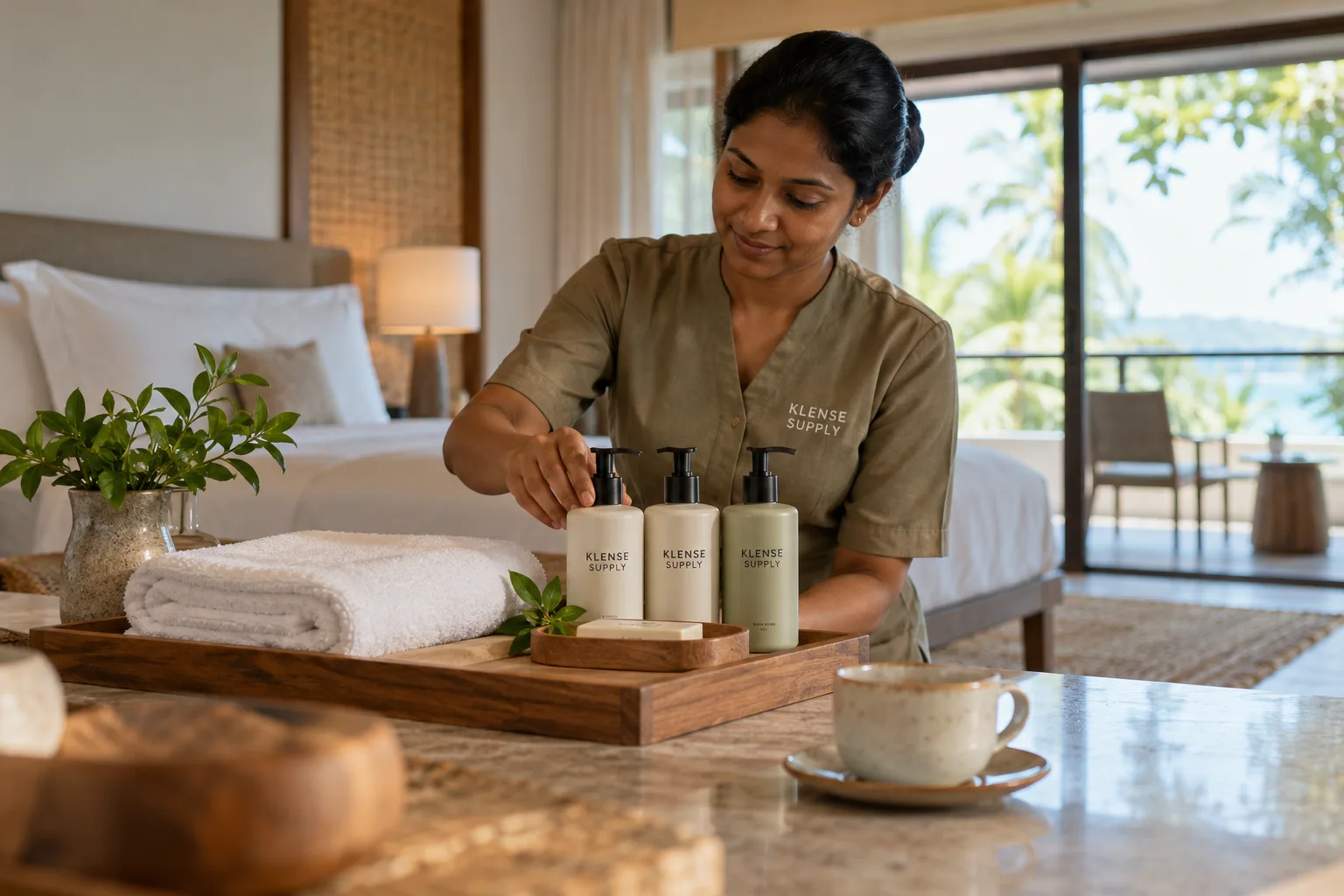
- Bathroom: shampoo, conditioner, body wash, lotion, soap and accessories, with bottle size, refill or single-use format, fragrance profile and branding.
- In-room beverage: tea varieties, packaging per serve, sugar and accompaniments, and how restocking is recorded by housekeeping.
- Dining: tea for service, spices and oils for the kitchen, coconut products, juices and food items, with pack sizes suited to back-of-house use.
- Back-of-house uniforms: housekeeping, kitchen, maintenance and front-of-house garments, with sizing, fabric, colour and logo requirements.
- Replenishment: expected usage per occupied room or cover, reorder points, storage space and how forecast changes will be communicated.
What to specify for each touchpoint
For each group, record the same core fields so suppliers can quote consistently: product description, format and size, branding or private-label requirements, quantity range, delivery location, storage conditions and any destination documentation. For food, beverage and personal care items, note the market's labelling and ingredient requirements, which should be checked for that product and destination. For uniforms, include a size breakdown and how replacements for new staff will be handled.
It is also worth recording the brand standard that ties touchpoints together. That might be a colour palette, a fragrance family, a tone for printed materials or a preference for refillable formats. Writing this down once avoids each supplier interpreting the brand differently.
A hypothetical brief for a boutique property
For example, imagine a forty-room boutique hotel opening a second property and wanting both sites to feel consistent. The purchasing manager builds the brief by touchpoint. Arrival includes a chilled juice and a branded welcome tea. The room includes a small tea selection in a branded caddy. The bathroom specifies refillable dispensers in a single fragrance family, with matching soap. Dining lists spices, oils and coconut milk in kitchen-sized packs. Uniforms cover reception, housekeeping and kitchen in one colour palette.
Under replenishment, the manager estimates usage per occupied room for tea and amenities and sets a reorder point for each. The figures in this illustration are planning assumptions, not supplier commitments, and the proposal for each category would confirm quantities, packaging and indicative dates.
Coordinating categories without losing control
A touchpoint brief works best when one coordinator can see all categories together. Klense Supply covers hotel amenities and hospitality supplies, tea, uniforms and workwear, food, juices and ready-to-drink beverages, coconut products, spices and oils, along with wellness and personal care categories. Private label and custom sourcing beyond the listed range are also offered.
A commercial contact handles scope and proposal, then introduces an operations contact who coordinates samples, production and delivery. Samples are paid and quoted separately, which lets a property approve the look and performance of key items before committing to volume. Logistics by air or sea freight is coordinated through CL Synergy, Klense's strategic logistics partner, and quoted separately. The quotation confirms shipment terms, inclusions and responsibilities, so the purchasing team knows what arrives where.
Frequently asked questions
Do we need to source every touchpoint at once?
No. Many properties start with the most visible categories, such as amenities and room tea, then add others. Writing the full touchpoint brief early still helps, because it keeps later categories consistent with the first.
How should replenishment be planned?
Estimate usage by occupied room or by cover, set reorder points that allow for production and freight time, and agree how forecast changes will be communicated. Timing depends on product, quantity and approvals, so review the plan against the proposal's indicative schedule.
Can uniforms and amenities share a brand standard?
Yes. Recording colours, logo placement and finish preferences in one brand standard section helps uniforms, printed packaging and amenity bottles present consistently across the property.
Discuss your supply requirements
If you are planning supply for a new property, a refurbishment or a group-wide standard, share your touchpoint list, locations, timing and expected volumes with Klense Supply. Send an enquiry or request a discovery call, and the team will confirm a time to review your brief.