The Klense journal · 4 minute read
How to brief a private-label herbal infusion: channel, flavour, format and price
Klense Supply ·
Start with the customer, not the ingredients
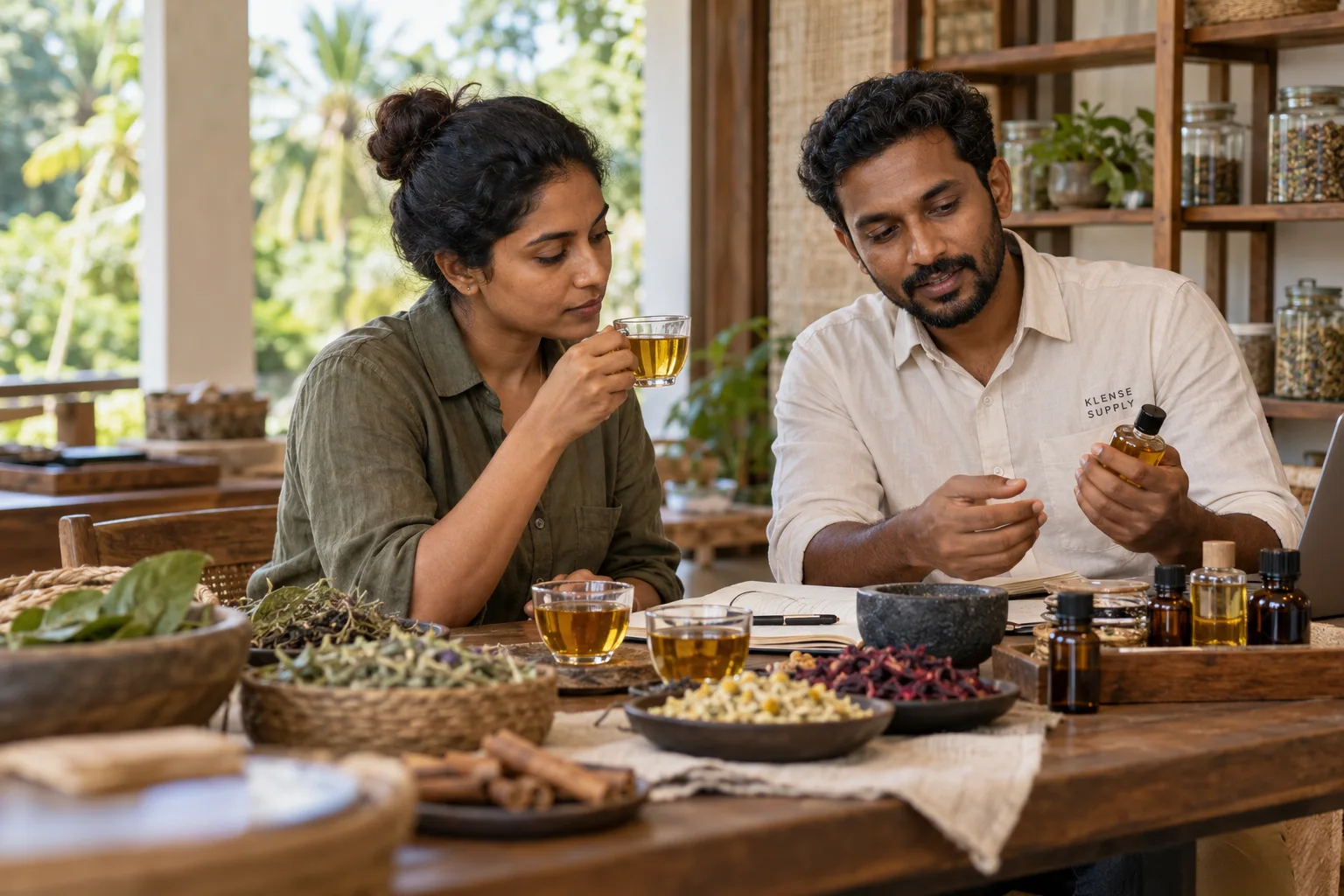
Many private-label herbal infusion projects begin with an ingredient list: chamomile, peppermint, lemongrass, ginger, hibiscus. It feels like the natural starting point, but it often leads to samples that taste good in isolation and then fail to fit the shelf, the menu or the price point.
A stronger brief works from the customer backwards. Who is buying, where, on what occasion and at what price? Once those answers are written down, the flavour, format and packaging choices become much easier to make, and the samples you request are far more likely to be approved. For wellness and retail brands, four decisions shape almost everything else: channel, flavour, format and price. They should be settled, at least provisionally, before formulation starts.
Decision one: channel and use occasion
The channel determines who meets the product, how they meet it and what the pack must do. A retail shelf needs a pack that explains itself in seconds. A hotel room needs individually wrapped serves that look tidy on a tray. A café needs a format that baristas can prepare consistently at speed. An online store needs packaging that survives parcel handling and photographs well.
Write a one-line use occasion for each channel. "An evening cup at home after dinner" or "a caffeine-free option on a café menu" tells a developer far more than "a relaxing blend". Describe the occasion and the experience, and avoid framing the product around health outcomes; any claims on a pack are a matter for the destination market's rules and the appropriate professional review.
Decision two: flavour direction
Flavour should follow the occasion. Give a direction rather than a recipe: the lead note, the supporting notes, the strength and what the cup should not taste like. Reference products the customer already knows are helpful, as are words the team agrees on, such as "bright citrus, gentle ginger finish, not sweet".
Think about range structure at the same time. A launch range of a few clearly different blends is easier to sample, approve and sell than a long list of similar ones. Decide whether the infusion will be served hot, iced or both, because that affects strength and blend composition.
Decision three: format and packaging
Format choices include loose-leaf, tea bags, pyramid bags, individually enveloped bags and bulk catering packs. Each affects the blend itself, since particle size and cut need to suit the format, and the packaging specification, unit cost and minimum quantities.
Packaging decisions to make early include the retail unit, serves per pack, outer carton configuration, shelf life requirements, barrier needs for aroma and moisture, and what the label must carry for the destination market. If the product will travel by sea, consider how the packaging will cope with time and humidity in transit.
Decision four: price and margin
Work backwards from the price the end customer will pay. Subtract the retailer or channel margin, freight, duties, warehousing and your own margin, and what remains is the landed cost the product must hit. That figure shapes ingredient choice, format and packaging far more than any other.
Price also determines quantity. Lower unit costs usually depend on larger runs, so be realistic about the first order. The Klense Supply proposal confirms scope, pricing, minimum quantities, packaging, sampling, payment stages and indicative dates, so a clear target price early makes that conversation far more productive.
The herbal infusion brief template
Complete these fields before requesting samples:
- Brand and range name, if known.
- Channel or channels, with a one-line use occasion for each.
- Target customer, described in a sentence.
- Flavour direction for each blend: lead note, supporting notes, strength, things to avoid.
- Serving style: hot, iced or both.
- Format: loose-leaf, bags, enveloped bags or bulk.
- Packaging: retail unit, serves per pack, outer carton, shelf life expectations.
- Target retail or menu price and the landed cost needed to meet it.
- Destination market and any documentation needed, such as organic, Halal or Kosher documentation, which is confirmed for the selected product and facility.
- Estimated first order quantity and repeat volume.
- Launch date and how firm it is.
For example, imagine a boutique hotel group briefing an evening infusion for its rooms: individually enveloped bags, a soft chamomile and lemon balm direction, branded sleeves for turndown trays and a modest first order. Every field in the brief points the development work in the same direction before a sample is made.
Frequently asked questions
Can we start with an existing blend rather than a new one?
Yes. A sample may be an existing product or part of a development brief. Starting from an existing blend can be faster, and adjustments can then be made to flavour, format or packaging. Samples are paid and quoted separately.
Can we make health claims on our infusion packaging?
Claims are governed by the destination market's rules and should be reviewed by the appropriate professionals for that market. A brief built around flavour, occasion and experience avoids many of these issues from the outset.
How many blends should a first range include?
Enough to give customers a real choice, but few enough to sample, approve and sell well. A small, clearly differentiated range is usually easier to launch and to reorder.
Discuss your supply requirements
If you are planning a private-label herbal infusion range, bring your channel, flavour ideas, format preferences and target price to an early conversation. Send an enquiry or request a discovery call, and the Klense Supply team will confirm a time.