
The Klense journal · 4 minute read
Labels, barcodes, print and pack: a pre-print and pre-dispatch checklist
Klense Supply ·
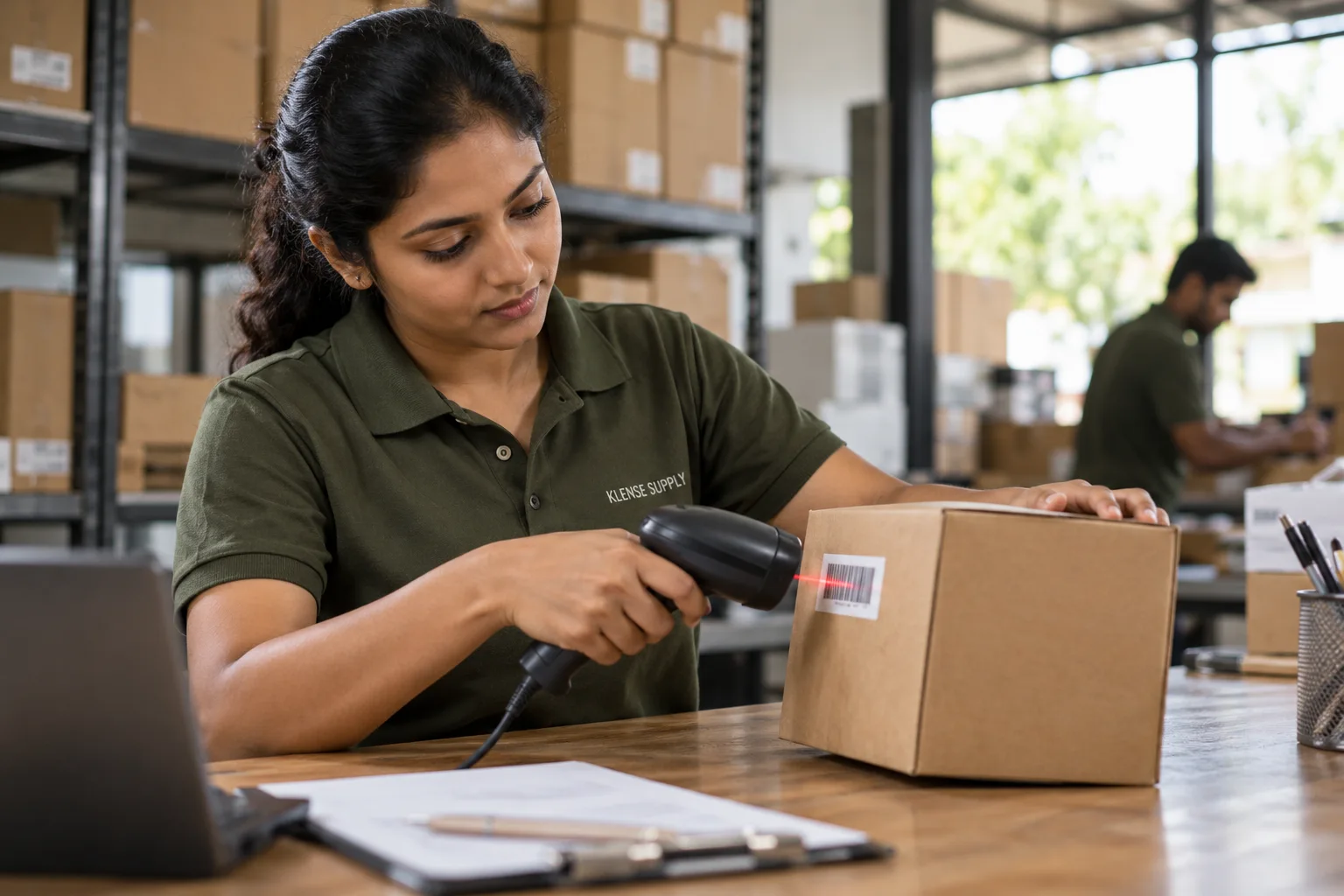
Two checkpoints that prevent most packaging errors
Most packaging errors are not dramatic. A barcode that will not scan, a missing allergen line, a carton mark in the wrong order, a label printed from the second-to-last version of the artwork. Each one is small, and each one can hold up a shipment, trigger a relabelling job or stop goods at a retailer's receiving dock.
These errors are best caught at two points: before artwork goes to print, when correction is cheap, and before the order is dispatched, when the physical output can be compared with what was approved. This article gives a practical checklist for each, which retail and hospitality buyers can print, adapt and sign off alongside their supplier.
Before you start: gather the reference set
A check is only as good as what it is checked against. Before either checkpoint, assemble one reference set and make sure everyone is working from the same version.
- The final approved artwork files, with version numbers and approval dates.
- The approved packaging specification: materials, dimensions, closures and finishes.
- Colour references for print.
- The barcode numbers allocated to each product and pack level.
- The destination market's labelling requirements, as confirmed by the buyer or their adviser.
- Any retailer or distributor requirements for carton marks, pallet labels or barcodes on outers.
- The approved sample, where one exists.
Pre-print checklist
Use this list before any artwork is released for printing.
- Artwork version matches the latest approved version; earlier files are archived.
- Product name, variant and size are correct and consistent across every panel.
- Net quantity is stated in the format the destination market expects.
- Ingredient or material list matches the approved specification exactly.
- Allergen, warning and usage statements are present where required.
- Required name and address details for the responsible business are present.
- Country of origin wording is correct.
- Batch code and date marking areas are allowed for and will be legible.
- Barcode number is correct for the product and pack level, and is not reused.
- Barcode size, quiet zones and colour contrast are suitable for scanning.
- Text is large enough to read at the printed size.
- Colours are specified against the agreed references.
- Translations, where used, have been checked by someone fluent in the language.
- Any certification or documentation marks appear only where that documentation is confirmed for the selected product and facility.
Regulatory requirements vary. Check the destination market's labelling rules for the specific product category; this list is a working prompt, not a substitute for that review.
Pre-dispatch checklist
Use this list once production is complete and before goods are released for shipping.
- Labels on finished goods match the approved artwork version.
- Print quality is acceptable: no smudging, misregistration or colour drift beyond the agreed tolerance.
- Barcodes scan correctly on sample units from across the run.
- Batch codes and dates are present, legible and correct.
- Seals, closures and caps are secure and match the specification.
- Units per inner and per outer carton are correct.
- Outer cartons carry the agreed marks: product, quantity, batch, carton numbering and any retailer requirements.
- Outer carton barcodes, where required, scan correctly.
- Cartons are in good condition and suitable for the freight route.
- Pallet configuration and labelling match what was agreed.
- Quantities shipped match the packing list and order.
- The shipping documents match the goods, the cartons and the quotation terms.
At Klense Supply, goods are checked against agreed specifications, with agreed checks and documentation before shipment. Buyers who want particular items from this list included should name them in the scope so they become part of the pre-shipment record.
Using the checklist in practice
Assign an owner to each line. Some checks belong to the buyer, such as confirming market labelling requirements and allocating barcodes. Others belong to the production side, such as print quality and carton counts. Some are shared.
For example, imagine a distributor ordering a private-label spice range for supermarket customers. At the pre-print stage, the team notices that the outer carton artwork is missing the carton barcode the retailer requires. Adding it costs nothing at that point. Found at the dock, the same omission could mean relabelling every carton.
Keep the completed checklists with the order record. They become a useful reference for reorders and a quick way to check that nothing has changed.
Frequently asked questions
Who is responsible for labelling compliance?
The brand owner or importer is usually responsible for the label meeting the destination market's rules, often with advice from a specialist. The supplier's role is to print and apply what was approved, accurately and consistently.
How many units should be checked before dispatch?
That depends on the product, order size and the checks agreed in the scope. The important point is to agree the approach in advance so the result is meaningful.
Should the checklist be repeated for reorders?
Yes. Even if nothing is meant to change, materials, print runs and requirements can. A quick repeat check protects every order.
Discuss your supply requirements
If you are preparing artwork or an export order and want the right checks built into the scope, bring your artwork, product details and destination to an early conversation. Send an enquiry or request a discovery call, and the Klense Supply team will confirm a time.