The Klense journal · 4 minute read
Why paid samples protect serious product development
Klense Supply ·
The hidden cost of free samples
Free samples can look like a sensible way to compare suppliers. In practice they often cost buyers more than they save. When a sample has no price, it also tends to have no brief, no criteria and no owner. The supplier sends something close to what it already makes, the buyer struggles to judge it against anything specific, and both sides spend time on a conversation that does not lead to a decision.
For private-label brands, distributors and hospitality groups developing their own products, that is a real cost. Development time is usually the scarcest resource in a launch plan. A sample process that produces vague results pushes decisions later, and later decisions compress production and freight timelines.
What a paid sample changes
Paying for a sample changes the relationship from an informal favour to a defined piece of work. That shift has several commercial benefits for the buyer.
- Focus: a paid sample is made against a written brief, so it tests the buyer's actual requirements rather than a stock product.
- Accountability: both parties know what was requested, what was supplied and what the next step depends on.
- Supplier attention: a supplier that is paid for development has a reason to assign capable people and to explain what it learned.
- Better comparison: when competing samples are made to the same brief, differences in quality, cost and practicality become clearer.
- Cleaner decisions: a defined sample stage ends in a recorded decision, such as approve, revise or stop, instead of drifting.
Paid samples as a filter for both sides
Charging for samples also filters for seriousness, and that works in both directions. Suppliers can prioritise buyers with a defined project, which usually means faster and more careful attention for those buyers. Buyers, in turn, can see whether a supplier treats development professionally. A supplier that quotes a sample clearly, confirms what it will include and explains what it cannot yet confirm is demonstrating the habits that matter in production.
This is not about making sampling expensive. It is about making it deliberate. The cost of a well-run sample stage is generally small compared with the cost of discovering a problem after a production run has been made, packed and shipped.
Existing product or development brief
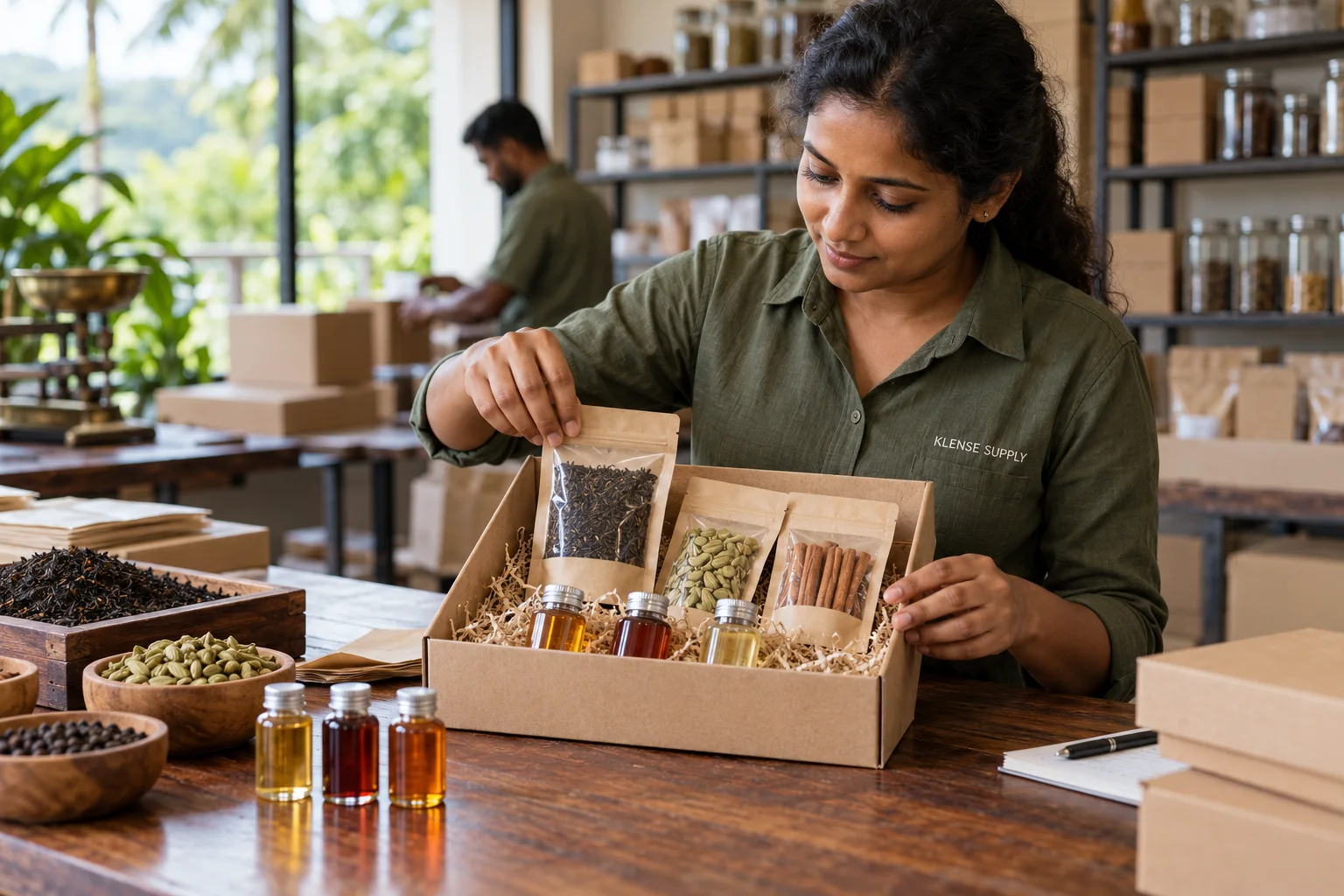
Not every sample needs to be developed from scratch. Sometimes the right first step is to sample an existing product, such as a standard tea blend or a coconut oil in a common pack, to confirm quality and suitability before discussing private-label changes. In other cases the sample is part of a development brief, such as a custom fragrance for hotel amenities or a wellness shot formulation for a specific market.
At Klense Supply, samples are paid and quoted separately, and a sample may be an existing product or part of a development brief. The proposal confirms scope, pricing, minimum quantities, packaging, sampling, payment stages and indicative dates, so the role of the sample stage is clear before work begins.
A hypothetical comparison
For example, imagine a café group wanting a house chai blend. Option one: the group requests free samples from several suppliers with a one-line description. It receives a range of stock blends in different formats, none labelled against its taste or pack requirements, and spends weeks debating which is closest.
Option two: the group writes a short brief covering flavour direction, spice intensity, tea base, serve method and pack format, then pays for samples made to that brief. Each sample arrives with a note on ingredients and assumptions. The group tastes them against the brief, records scores and approves one with two adjustments. In this illustration, the paid route reaches a clear decision with fewer rounds. The detail is hypothetical, but the pattern is common.
Getting value from the sample fee
To make the most of a paid sample, prepare a brief before requesting a quote, agree how the sample will be judged and decide who will sign off. Ask the supplier to state any assumptions, such as ingredient sources or packaging components that are not final. After evaluation, record the outcome and the reasons, then carry those notes into the next stage so the work is not repeated.
Frequently asked questions
Is a paid sample a commitment to place an order?
No. A paid sample is a defined development stage. It gives the buyer evidence to decide whether to proceed, revise the brief or stop. Any production order is a separate decision based on the proposal.
Why not ask several suppliers for free samples instead?
Free samples are rarely made to a shared brief, which makes them hard to compare and slow to act on. Paying for samples made to the same brief usually produces clearer evidence and a faster decision.
What should we prepare before requesting a sample quote?
Prepare a short brief covering the product, intended market, key quality attributes, pack format, branding needs, quantity range and target timing. Note anything that is still undecided.
Discuss your supply requirements
If you are developing a private-label or custom product, share your brief, target market and timing with Klense Supply and ask for a sample quotation. Send an enquiry or request a discovery call, and the team will confirm a time to discuss the sample stage.